
Imagine your real estate website as a sleek, high-performance vehicle: all polished chrome and horsepower under the hood.
But here’s the thing: even the most beautiful car won’t get you anywhere if it just sits in the garage. It needs someone to get behind the wheel, drive it regularly, and make sure it’s tuned for the road ahead.
This is an analogy we have loved to use for years now. In 2025, that road is entirely digital, competitive, and constantly evolving. From small visual updates to large content strategies you adopt, every update you make to your website is like stepping on the gas. One of the biggest questions we get from our agents is “What can we do to keep our website up to date?” and these 15 quick tips are what we would recommend thinking about — they’re sure to help you cruise past the competition!
1. Make sure you have a custom favicon that matches your brand identity for better recognition in browser tabs

Creating and uploading a favicon is straightforward and quick. What is a favicon? It’s that little icon you see next to the website’s name in your browser, usually made of the logo for the site. You should choose something recognizable at that size, for example a letter or simple shape that can stand for your brand rather than the entire logo. Luckily, Canva has an easy solution to actually getting one: Click here!
Ninja Tip: If you’re a RealtyNinja customer, just send us an email with your logo and we’ll get it uploaded to your site settings for you.
2. Show “social proof” elements (awards, certifications, sales statistics)
This simply involves collecting existing accolades as your first step, and then adding them to your website. When you are presented an award, most organizations will provide you with the image file you are allowed to use, and you can upload that where it makes sense: try by your biography or sold listings!
3. Consider your website as the connector hub to all your other online profiles
Double-check that you have links to all of your social media profiles, and maybe even feeds that show your latest posts. Likewise, your other profiles should have your website URL on them too. Your website should act as the “central hub” that you send people to for more information, articles, etc. since social media tends to be better at specific marketing angles and more casual conversation.
We really like Elfsight’s platform for beautiful and easy-to-create social media feeds. Try them out! Here’s how Jay Richardson displays her latest Instagram posts, as well as Google Reviews on her brand new beautiful website:

4. Update your client testimonial section with authentic, diverse feedback from local buyers/sellers
Gathering and displaying testimonials is straightforward if you have them readily available. You can copy/paste or screenshot Google (or Facebook) Reviews, too! Use visual formatting like bolding keywords in their testimonials for your potential clients to catch while skimming. For the most professional look, try and include photos to accompany the testimonials. Bonus points for videos! (Although you can’t beat Victoria Realtor® Zamian’s)
5. Include seasonal photography of properties in different Canadian weather conditions
Assuming you own the rights to property photography, go ahead and use your best shots throughout your website. People love looking at homes when they’re in the market, and if you use pictures relevant to the time of year, that shows you’re on top of your digital marketing and the industry. This type of visual makes your pages feel really personalized to your business, and professional to boot!
6. Make listing groups for what your audience is interested in
For example, make pages where you can post listings that you know are pet-friendly, in 55+ communities, oceanfront… whatever your potential clients are interested in, capture that interest and help them find what they’re looking for! It might mean some manual organization of listings, but it shows that you know what they’re looking for and can go to you for the latest updates.

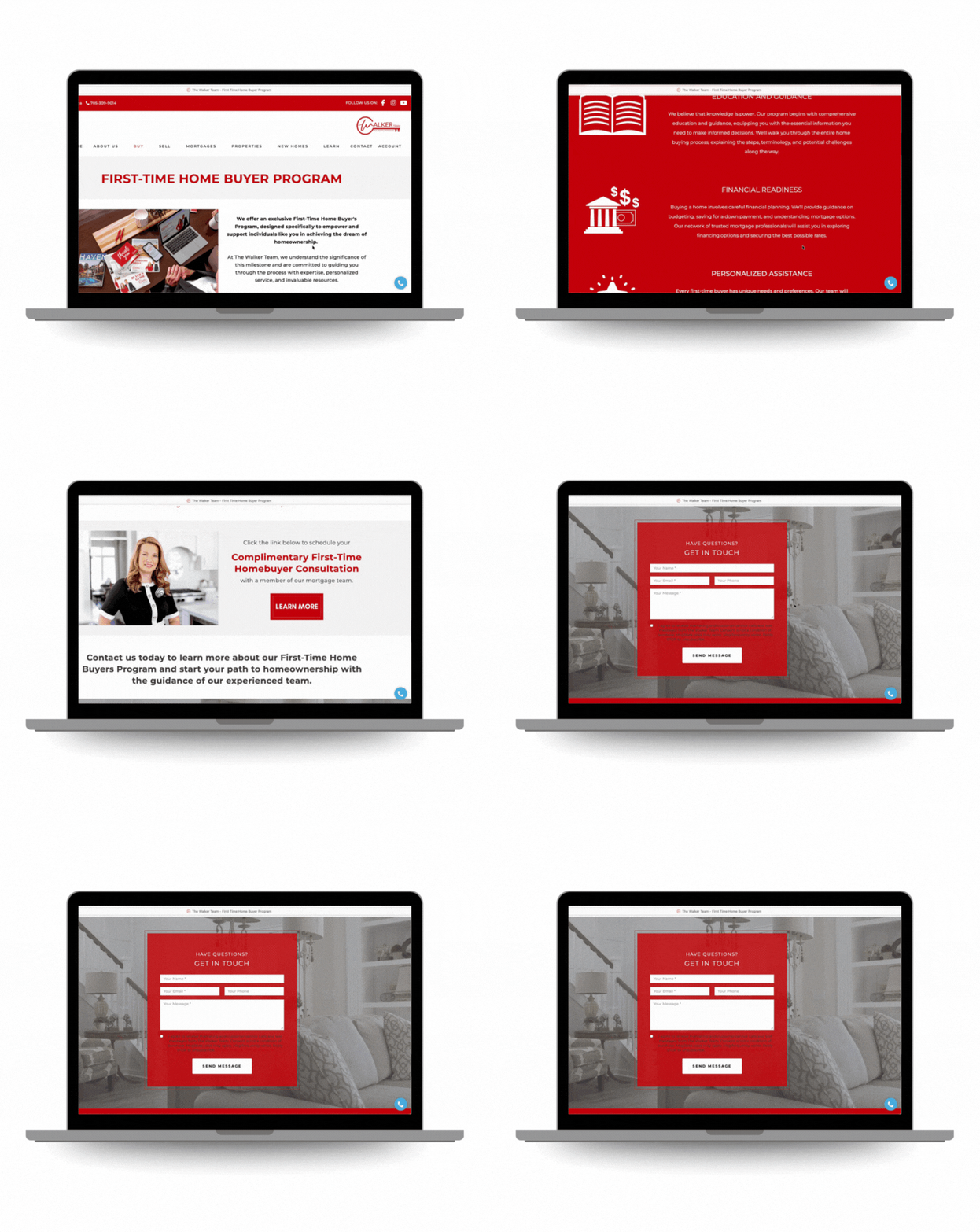
7. Create dedicated pages for first-time homebuyers
Creating informational pages based on existing knowledge requires moderate effort, but can make a big impact. Not all agents are going to focus on gaining first-time homebuyers as clients, but if you do, showing your expertise in the area will make them feel more confident about reaching out to you. Don’t forget to include photography they can relate to so it breaks up large blocks of text.
8. Organize a local resource directory for home services, moving companies, and renovation professionals
You may already have certain companies saved to your phone contacts that you recommend to home buyers and sellers — why not promote them on your website, and show potential customers how much local relationships mean to you as well?
Ninja Tip: Reach out to those companies and see if they’ll link back to you as well!
9. Post seasonal content that addresses uniquely local concerns
O, Canada: home to provinces where we say things like “we have 2 seasons: road construction, and winter”. BC gets nasty windstorms in the fall, and QC can get scarily icy. If you’re an AB Realtor®, you’ll never run out of possible ideas! Homeowners need to be aware of taking care of property during all of these, not to mention the usual seasonal maintenance tips and information. Your blog can be their go-to when the seasons change, and live on their Favourites bar!

10. Audit all content and refresh at least quarterly
We can’t stress this one enough, it’s so important. Regardless of how fresh or seasoned your website is, someone should be going through it semi-regularly to identify content that can be updated or refreshed. Maybe you’ve updated how you care for your home buyers, or you’ve gotten new signs done that you can showcase on your ‘Selling’ page — and especially if you still have any “stock” text that came with your website, it’s best to get that updated!
11. Build content addressing the specific needs of newcomers to Canada
This suggestion does take research and/or understanding of the unique challenges faced by newcomers, which takes more time to develop, however! With the large population that is in need of this information, it’s a great opportunity to showcase expertise on and become the one they reach out to. Whether this means a full page on your website or a blog category for newcomers to read, that’s up to you!
12. Develop resources addressing multi-generational housing solutions
This is another fairly unique subject, but an important one to many homebuyers. If you are able to showcase testimonials or customer stories about their multi-generational home-buying journey, you can target this audience and show that you’re aware and experienced in what this entails for them.
13. Write neighbourhood guides that highlight seasonal activities unique to each area
Similar to the more general seasonal content suggestion, this one would be unique to neighbourhoods and get really specific. It’s an opportunity to show your love and knowledge about these areas more than any other agent someone might be looking at. Things like posting about the local Farmer’s Market, when the patios open up, when the local sled hills have enough snow for the kids… these are also great cross-posts for your social media!

14. Publish regular market analyses that contextualize national headlines with what’s going on locally
AKA: Reference that Big Housing News they hear about on TV and what it actually means to them. What’s happening on the national level might not have anything to do at our municipal level. If you can alleviate fears or give some motivation to people that are looking at selling their home (with real facts, of course), it will mean a lot to people that are stressing about it.
15. Embrace video! Record yourself talking about the content you post
This can act as an “umbrella” on top of all of the other ones, but one of the biggest tips we can give is to try and get comfortable with being on camera and putting your face to the content you put out. More and more people are preferring podcast media as opposed to purely written, although having the text is still very important for your website. There are a ton of software and apps available now to make the post-recording process easier, too!
Those are our top 15 big ideas on improving your real estate website. Here are 15 more tidbits!
- Include a glossary of some Canadian or provincial real estate terms that differ from American (or the rest of Canada) terminology to help first-time buyers.
- Create content addressing climate considerations for different property types in your area (ie. flooding, snow, wildfires)
- Share testimonials from clients who purchased remotely from other provinces or internationally.
- Highlight Indigenous land acknowledgments and resources about the history of the areas you serve.
- Create content addressing foreign buyer considerations under current Canadian regulations.
- Develop resources about local community amenities that aren’t typically highlighted in listings.
- Share information about local utility providers and average costs for your specific service areas.
- Create a calendar of local community events that potential residents might want to attend.
- Develop content about local school catchment areas and registration timelines.
- Create content highlighting local architectural styles and their historical significance.
- Develop guides about local rental regulations for investment property buyers.
- Share information about community gardens, farmers markets, and local food sources.
If you found this list helpful, please give us a little tag wherever you promote it so we can come check it out!